




What Is a Solar Canopy and Is It Right for Your Property?

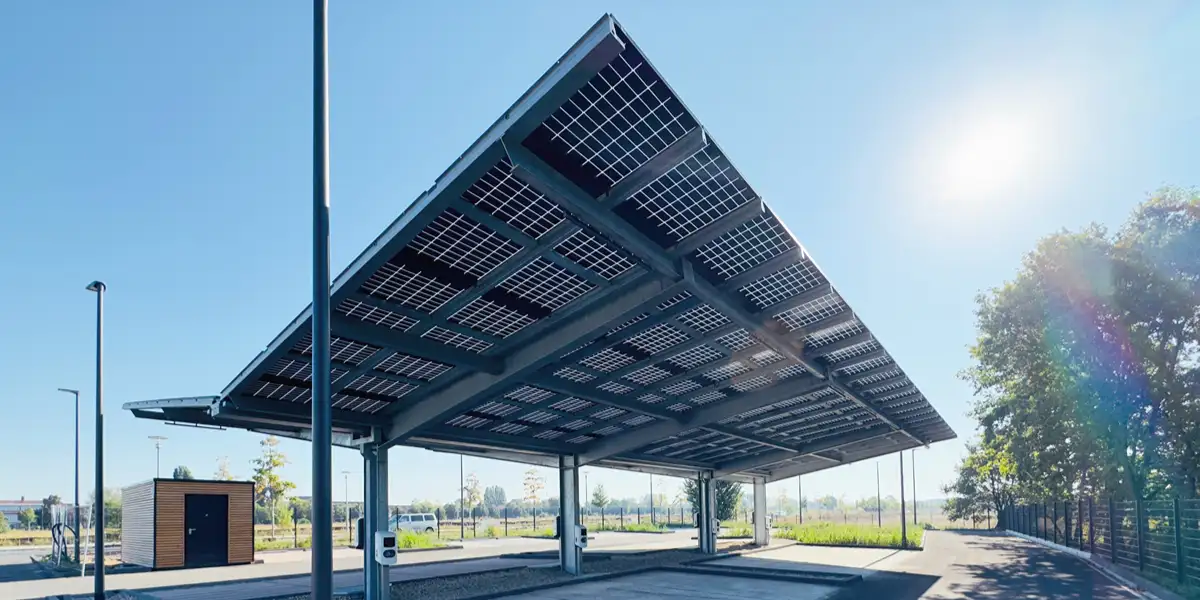
If you’ve been researching solar options, you may have come across the term solar canopy. UK customers might be wondering how it differs from panels fixed to a roof. A canopy takes the same solar technology and mounts it on a freestanding structure instead, opening up space a roof simply can’t offer.
For homeowners with a large driveway or businesses with an unused yard, this can turn an overlooked area into a genuine source of energy. Before deciding whether a canopy suits your property, it helps to understand what one is and how it compares to the systems most people already know.
What Is a Solar Canopy and How Does It Work?
A solar canopy is a standalone structure fitted with solar panels, built to sit above a car park, driveway, yard, or open piece of land rather than on a roof. The frame is usually steel or aluminium, engineered to hold the panels at an angle that maximises sun exposure while providing shelter underneath, whether that’s for cars, machinery, or outdoor storage.
Many canopies use bifacial solar panels, which capture sunlight on both the front and rear of each panel. Because a canopy is elevated and open on all sides, light reflected from the ground beneath it can reach the underside too. This makes bifacial technology a natural fit for canopies in a way it rarely is for roof-mounted systems, where the rear sits flush against the roofline.
In effect, a canopy functions as both a solar shade structure and a generation asset, giving you cover and electricity from the same footprint.
Solar Canopy vs Roof-Mounted Solar: What's the Difference?
The core technology is the same. Panels convert sunlight into electricity whether they sit on a roof or a canopy frame. The difference lies in where that generation happens and what else the structure gives you.
Roof-mounted solar makes use of space you already have, which usually makes it the more straightforward option when compared to a solar canopy. UK homeowners should consider solar canopies if their property’s roofs are shaded, unsuitable, or already at capacity, and there’s spare land that would otherwise sit idle. A solar carport is the most familiar example, turning a parking area into an energy asset while giving vehicles cover at the same time.
The trade-off is cost. A canopy requires groundworks and a freestanding frame, so it involves a larger investment than a straightforward roof fit. What you gain in return is flexibility and the ability to generate solar power where a roof was never going to be the answer.
Where Do Solar Canopies Work Best?
Canopies suit a specific set of situations rather than every property, and recognising where they perform best will help you judge whether one fits your own site:
- Domestic Driveways and Solar Carport Installations: Ideal where a roof isn’t suitable, or where a homeowner wants an EV charging canopy alongside covered parking.
- Commercial Car Parks and Yards: Large surface areas otherwise unused for most of the day, offering scope for a sizeable array.
- Agricultural Solar Canopy Setups: Fitted above yards or machinery parking, allowing farms to generate power without giving up productive growing land.
- Ground-Mounted Solar Canopy Structures on Open Land: Suited to sites with no viable roof space, where a freestanding frame is the only practical route to solar.
What ties these applications together is open space paired with a genuine need for shelter or generation, or both. A commercial yard that already needs a covered structure can often justify a canopy more easily than a small residential drive.
Planning Permission and Installation Considerations
A new structure is involved with a solar canopy. UK property owners should, therefore, be aware that planning permission is usually required, as opposed to roof-mounted systems which simply involve fitting panels to an existing surface.
This differs from many roof-mounted systems, which often fall under permitted development rights. Local authorities will typically want to assess the height, position, and visual impact of the structure before work begins, particularly on residential streets or within conservation areas.
Ground conditions matter too. Foundations need to support the weight of the frame and panels, and the site should be assessed for drainage, access, and proximity to existing structures or boundaries. Commercial and agricultural sites often have more flexibility here, simply because there’s more space to work with and fewer neighbouring properties to consider.
Getting a professional assessment early on, before committing to a design, is the most reliable way to avoid delays further down the line.
What Output, Savings, and Costs Can You Expect?
Output from a solar canopy depends on its size, orientation, and the type of panel used. Because many canopies use bifacial solar panels, they can generate meaningful additional electricity from reflected light, on top of what the front face produces in direct sunlight. A well-positioned canopy over a large driveway or yard can rival the output of a modest roof-mounted array, simply because there’s more surface area to work with.
Several factors influence the final cost:
- Structure Size: Larger canopies cost more to build but generate proportionally more electricity.
- Groundworks: Foundation requirements vary with soil type and site conditions.
- Panel Choice: A solar shade structure fitted with premium panels costs more upfront but can improve long-term output.
- Additional Features: An EV charging canopy adds cost but lets you charge a vehicle directly from the energy generated overhead, rather than exporting or storing it elsewhere first.
How SESC Solar Service Can Help You Go Ahead with a Solar Canopy
At SESC Solar Service, we’ve built our experience across solar PV, solar thermal, battery storage, and EV charging, so we can easily handle your new solar canopy. UK customers should note that we treat every project as a complete system rather than an isolated structure. Our team includes time-served tradespeople from electrical, plumbing, and heating backgrounds, so we understand how a canopy needs to integrate with your wider energy setup.
We’ll assess your site, advise on canopy planning permission requirements, and talk you through whether a canopy, a roof-mounted system, or a combination of both suits your circumstances. Every installation comes with a lifetime warranty, and as an MCS-certified and NICEIC registered provider, the job is done to the correct standard. If another company has already given you a written quote, we’ll beat it too.
Is a Solar Canopy the Right Fit for Your Property?
When it comes to installing a solar canopy, UK properties all differ, so canopies won’t always be the right choice. But for driveways, car parks, yards, and agricultural land with no viable roof space, it can turn an unused area into a genuine source of energy and shelter.
If you’d like an honest assessment for your property, our team is available 24/7 on 01747 445 509, or you can reach us through our contact form. We’ll give you a clear picture before any work begins.
Book Your Free Survey Today
Let’s discuss what your property needs — whether it's a new solar installation or an expert check-up.