




How Much Does Solar Water Heating Cost to Install in the UK?

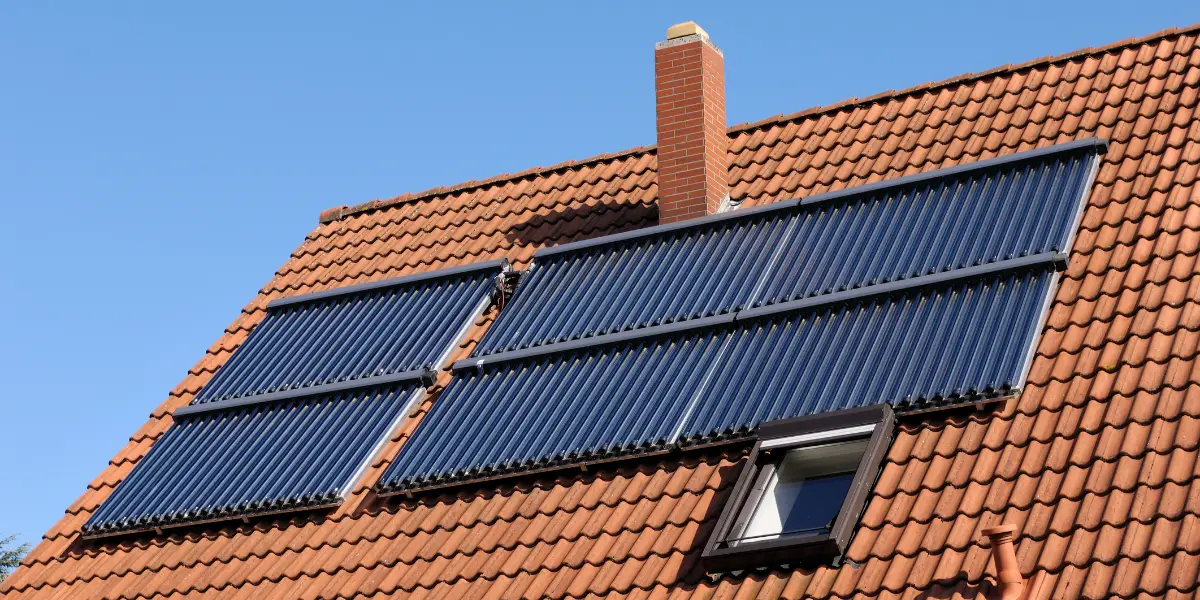
Solar water heating costs typically range from £4,000 to £7,000 for a standard UK home, with more complex installations costing up to £9,000. And for most households, a solar thermal system will cover between half and two-thirds of their annual hot water demand.
Whether that investment makes sense for your property depends on more than the headline price. The type of collector, your current hot water setup, and your home’s configuration all shape the real-world return. This article walks through the costs, explains the two main system types, and gives you a clear picture of the savings and payback periods.
Average Solar Water Heating Installation Costs in the UK
For most homes, solar water heating costs range from £4,000 to £7,000. That covers a standard two-collector system with a new twin-coil cylinder, circulation pump, controls, and installation labour. At the lower end, you are looking at a straightforward installation on an accessible south-facing roof. At the higher end, costs reflect larger systems, more complex roof access, or work required to integrate with an existing heating setup.
Solar hot water system prices vary depending on the collector type you choose, with solar thermal installation costs for evacuated tube systems often higher than those for flat plate systems. That said, the gap is not always as large as people expect.
Flat Plate vs Evacuated Tube Solar Collectors
The two main collector types used in UK solar thermal installations are alluded to above. Each has distinct characteristics worth understanding before you decide.
Flat Plate Solar Collectors
A flat plate solar collector consists of an insulated panel with a dark absorber plate beneath a glass or polycarbonate cover. The design is well established and has been used in UK domestic installations for decades, making it straightforward to service and source parts for.
Flat plate collectors cost less upfront than evacuated tube alternatives and perform reliably in typical UK conditions. For most households, the solar water heating cost of a flat plate system represents good value, as they are durable, low-maintenance, and compatible with standard cylinders. Flat-plate solar thermal system costs are generally lower than those of evacuated-tube systems, making it a sensible starting point for most homeowners.
Evacuated Tube Collectors
On the other hand, evacuated tube collectors use a series of glass tubes, each containing an inner absorber and a vacuum layer that limits heat loss. That insulation means the collectors retain heat more effectively in cold or overcast conditions, giving them an edge during winter months.
Evacuated tube collector costs are higher than for flat plate systems, and in a typical UK climate, the efficiency gains are often modest relative to that price difference. For properties with limited roof space, the smaller footprint can justify the additional outlay. On a standard domestic installation, however, the performance gap between the two collector types tends to narrow considerably over a full year.
What Is Included in a Solar Water Heating Installation?
Understanding what goes into a solar thermal installation helps explain why costs sit at the levels they do. A complete renewable hot water system involves several components, and each contributes to the final price.
A standard installation typically includes:
- Solar Collectors: Mounted on the roof and sized to match your hot water demand. A flat plate solar collector array for a family home usually covers two to four square metres.
- Twin-Coil Hot Water Cylinder: Solar thermal systems require a cylinder with a dedicated solar coil. If your existing cylinder is not compatible, replacement is factored into the cost.
- Circulation Pump and Controller: The pump circulates heat transfer fluid between the collectors and the cylinder. The controller manages the system automatically.
- Heat Transfer Fluid: A glycol-based antifreeze solution that protects the system in cold weather and carries heat to the stored water.
- Pipework and Labour: Insulated pipework connecting the roof to the cylinder, installed by a qualified engineer.
Running Costs and Maintenance
One of the more reassuring aspects of owning a solar thermal system is that ongoing costs are low. The solar energy itself is free, and the system has very few moving parts. The main running expense is the electricity used by the circulation pump, typically between £10 and £20 per year.
Maintenance requirements are minimal, but not zero:
- Periodic System Checks: A professional inspection every 3 to 5 years is sufficient to confirm proper operation, check pressure, and detect early signs of wear.
- Glycol Replacement: The antifreeze solution degrades over time and should be checked and replaced periodically, typically every five to ten years.
- Collector Cleaning: Rainfall keeps collectors clean in most parts of the UK. In areas with higher dust or pollution, occasional cleaning may help maintain output.
These costs are modest, and many homeowners find the system runs for years without significant intervention.
Are There Grants or Incentives for Solar Water Heating?
This is an area where expectations sometimes run ahead of reality. There is no dedicated UK-wide grant specifically for solar thermal, and the Boiler Upgrade Scheme does not cover solar water heating systems. The solar water heating grant landscape is more limited than it was under the Renewable Heat Incentive, which closed to new applicants in 2022.
Some support may still be available depending on your circumstances. The ECO4 scheme, administered through energy suppliers, funds energy efficiency measures for lower-income and vulnerable households. Solar thermal installation costs are not universally covered under ECO4, but eligibility is worth checking if your household qualifies. Some local authorities also run retrofit programmes that include solar thermal, so contacting your council is a practical first step.
For most homeowners, installation will need to be funded privately. That makes understanding realistic savings and payback periods all the more important before committing.
How Much Can Solar Water Heating Save?
A well-sized solar thermal system typically covers 50 to 60 percent of a household’s annual hot water demand. During summer, that contribution rises to between 80 and 90 percent, with the conventional heating system taking over in the cooler months.
How much that saves in practice depends largely on what you are replacing. Households heating water with electricity see the greatest financial benefit, with typical annual savings of £80 to £120. For homes on mains gas, where the unit cost of heating water is lower, solar water heating cost savings are more modest, often between £50 and £80 per year. Solar thermal system costs are therefore hardest to justify purely on financial grounds for gas-heated properties, though the carbon reduction remains a genuine benefit.
Actual savings also depend on household size, usage habits, and how well the system matches your demand.
Is Solar Water Heating Worth the Cost?
For most gas-heated homes, payback periods are long. A system installed at £5,000 to £6,000 could take 15 to 25 years to recover through energy savings alone. That is a significant commitment, and one that we will always set out clearly before recommending an installation.
Where solar water heating becomes a more straightforward investment is in specific circumstances. If you are replacing an electric immersion heater as your primary hot water source, solar hot water system prices can pay back considerably faster, sometimes within 10 to 15 years. If you are already replacing an ageing cylinder, incorporating solar at the same time reduces the effective additional cost.
Property suitability matters too. A south-facing roof with good unshaded access will meaningfully outperform an east or west-facing one. Roof space, cylinder location, and pipework complexity all affect both cost and output, and a proper survey is the only reliable way to understand what your property will deliver.
Ultimately, it all comes down to your situation and needs, as a solar thermal installation can be a highly beneficial upgrade.
Solar Water Heating: A Long-Term Investment for Your Home
Solar water heating offers a practical way to reduce reliance on conventional energy for hot water. Costs vary, payback periods require honest expectations, and the right system depends on your property, and it is also worth checking whether any solar water heating grant support applies in your area.
To find out what makes sense for your home, call SESC Solar Service on 01747 445 509 or use our contact form.
Book Your Free Survey Today
Let’s discuss what your property needs — whether it's a new solar installation or an expert check-up.