



What Damage Can Birds Cause to Your Solar Panels

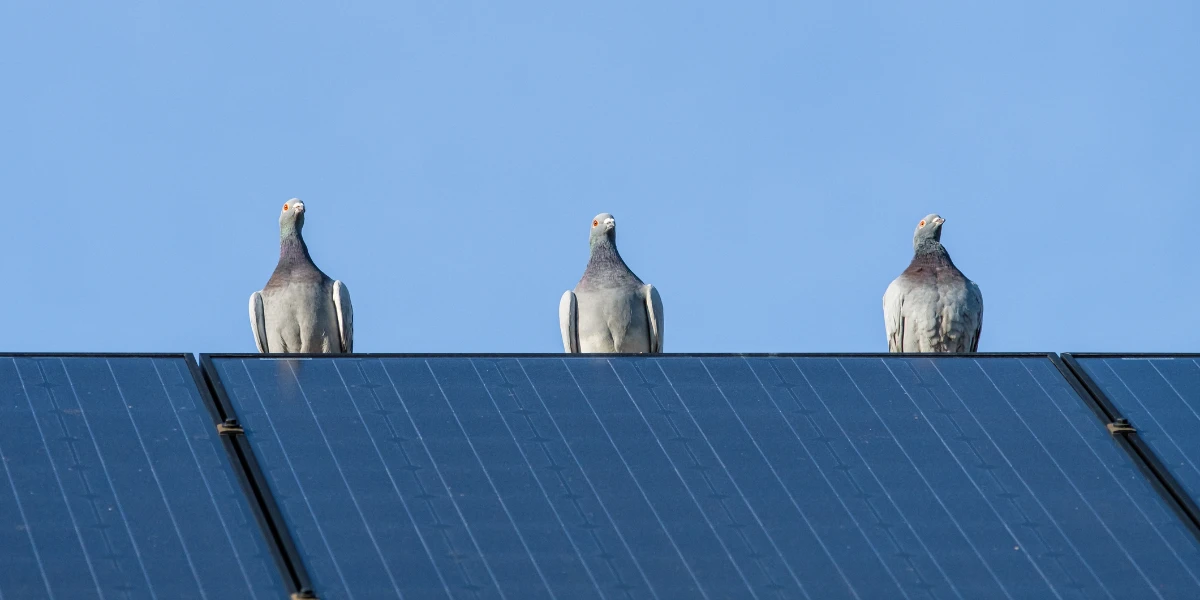
Birds and solar panels are an increasingly common combination on UK rooftops. While a pigeon settling on a panel may seem harmless enough, the reality beneath those panels tells a different story. Birds often nest under rooftop solar panels, using the warm, sheltered gap as a safe haven year-round. Over time, that activity leads to wiring damage, debris buildup, panel contamination, and a gradual drop in system performance.
Taking steps to protect solar panels from birds is not an optional extra; it is a practical part of keeping your system running as it should. Understanding the damage birds can cause is the first step.
Why Birds Are Attracted to Solar Panels
Solar panels create conditions that birds find genuinely appealing. The gap between the underside of the panels and the roof surface stays warm throughout the year, retaining heat generated during daylight hours. For birds nesting under solar panels, that warmth makes a significant difference, particularly during colder months when natural nesting spots offer little shelter.
The position also offers protection from predators. Panels sit flush against the roofline, creating an enclosed space that is difficult for larger animals to access. Combined with the elevated position, this makes rooftop solar panels one of the more attractive nesting locations available in a suburban environment. It is precisely because the conditions are so favourable that steps to protect solar panels from birds are worth taking early, before a colony has a chance to settle.
Pigeons are the most frequent offenders, though sparrows and starlings also nest beneath panels with regularity. Once a colony establishes itself, the birds return season after season. What starts as a single pair nesting quietly can become a persistent and growing problem if left unaddressed.
Guano Damage to Solar Panels
Solar panel guano damage is one of the most common factors that impacts solar panels, and the effects are more serious than most homeowners realise. Droppings contain uric acid, which is corrosive to the surface coatings used on solar panels. Over time, repeated exposure can degrade those surfaces, creating micro-abrasions that reduce light transmission and accelerate panel wear.
Beyond the chemical damage, a heavy accumulation of droppings acts as a physical barrier between the panel surface and incoming sunlight. Even partial shading from guano can have a disproportionate effect on output, because solar panels are sensitive to uneven coverage across their surface.
Pigeon damage to solar panels is a common cause of unexplained performance drops. Homeowners often assume the issue lies with the inverter or wiring, when the panels are simply coated in a season’s worth of droppings. Protecting solar panels from birds helps prevent this kind of gradual, avoidable loss.
Nesting Debris Blocking Solar Panel Ventilation
Solar panels are designed to operate within a specific temperature range. They generate heat during operation, and the gap between the panels and the roof surface plays a role in allowing that heat to dissipate. When birds pack nesting materials into that space, twigs, feathers, leaves, and compacted debris restrict airflow and trap heat beneath the panels.
Elevated operating temperatures have a direct effect on solar panel output reduction. Most panels lose efficiency as temperature rises, a characteristic described in their temperature coefficient rating. A panel running significantly hotter than intended will consistently underperform, and that loss compounds across the system over time.
Protecting solar panels from birds helps preserve the ventilation conditions the manufacturer intended. Routine solar panel maintenance should include checking the underside of panels for nesting debris, particularly after winter. Catching a buildup early prevents the kind of sustained temperature stress that shortens panel lifespan.
Birds Chewing Solar Panel Wiring
The electrical cabling that connects solar panels runs along the underside of the array, often through the same gap that birds use for nesting. Birds chewing solar panel wires is a more common problem than most people expect, particularly where pigeons and starlings are present in numbers.
Birds are drawn to cables for several reasons. Nesting materials become entangled around wiring, and birds will peck and pull at anything that interferes with the nest. Some species also chew through materials as part of nest-building behaviour. The insulation around solar panel cabling is not designed to withstand this kind of sustained physical attention.
Damaged wiring creates real risks. Exposed cables can cause short circuits, arc faults, and, in more serious cases, electrical fires. At a minimum, damaged wiring will interrupt the system’s ability to generate power, often with no obvious external sign until a fault appears on the inverter.
Physical Damage Caused by Birds
Beyond droppings and wiring, birds nesting under solar panels cause a range of physical damage that is worth understanding in full:
- Scratched Panel Surfaces: Birds land and perch repeatedly on the same panels, and their claws cause fine scratches across the glass surface. Over time, this surface degradation reduces light transmission and contributes to gradual output loss.
- Dislodged Roof Tiles: Nesting activity beneath panels puts repeated pressure on the surrounding roof structure. Birds manoeuvring into and out of the nest space can shift tiles, and the weight of nesting materials can work loose the fixing points around the panel frame.
- Debris Accumulation Under Panels: Nests grow over time. A nest that begins as a small collection of materials can expand to fill a significant portion of the underside of the array, trapping moisture, harbouring parasites, and accelerating corrosion on mounting brackets and fixings.
Each of these damage types is manageable when caught early.
The Long-Term Cost of Ignoring Bird Damage
One of the more significant problems with bird activity on solar panels is that nesting birds return. Once a colony establishes a roost, they treat it as a permanent home. Each spring brings a new nesting cycle, adding another layer of debris, droppings, and wear to the system beneath.
The cumulative effect is substantial. Solar pest damage tends to worsen gradually rather than announcing itself with a sudden failure. Homeowners may notice a slow decline in generation figures without connecting it to bird activity, and by the time the cause is identified, the damage across the cabling, panels, and roof structure may require significant repair work.
Routine solar panel maintenance is the most effective way to stay ahead of this. A qualified engineer can assess the extent of nesting, clear debris safely, inspect wiring for damage, and identify roof tile displacement before it becomes a more serious structural issue.
How to Protect Solar Panels from Birds
Preventing bird nesting is more straightforward than dealing with the aftermath, and there are several proven approaches worth considering:
- Protective Mesh Systems: A purpose-designed mesh fitted around the perimeter of the array closes off the gap between the panel frame and the roof surface, blocking access without affecting performance or ventilation.
- Professional Bird Proofing Installation: Fitting mesh on a pitched roof requires the right equipment and experience. A professional installation ensures the mesh is correctly fixed without damaging panels, frames, or tiles.
- Regular System Inspection: Even with bird proofing in place, periodic solar panel maintenance is worthwhile. An annual check confirms the mesh is intact and the system is performing as expected.
Installing professional solar panel bird proofing is one of the most effective ways to protect solar panels from birds, and a solar panel protection system pays for itself quickly against the cost of sustained bird damage.
Act Before the Damage Adds Up
Birds nesting beneath solar panels can cause serious damage to the system and the roof below. Droppings degrade panel surfaces, nesting debris restricts ventilation, and chewed wiring creates genuine electrical risks. The longer the activity continues, the more extensive the repair becomes.
If you have noticed bird activity around your panels, contact SESC Solar Service on 01747 445 509 or use our contact form to arrange an inspection and protect solar panels from birds before the damage escalates.
Book Your Free Survey Today
Let’s discuss what your property needs — whether it's a new solar installation or an expert check-up.